
There’s something enchanting about the fusion of creamy coconut milk and rich peanut butter that transports me straight to the vibrant streets of Thailand. It was on a particularly busy weeknight when I stumbled upon this delicious Thai Peanut Curry Chicken recipe-a quick yet indulgent meal that rivaled my go-to takeout. With tender chunks of chicken and hearty vegetables bathed in a luscious, aromatic sauce, this dish is not only a feast for the senses but also perfect for family dinners.
In just 30 minutes, you can whip up a comforting bowl that's packed with flavor and versatility. Whether served over fluffy jasmine rice or tossed with noodles, this Thai Peanut Curry will feel like a warm hug on a plate. Ready to impress your loved ones or simply treat yourself? Let's dive into this delightful recipe that proves homemade food doesn't have to be complicated!
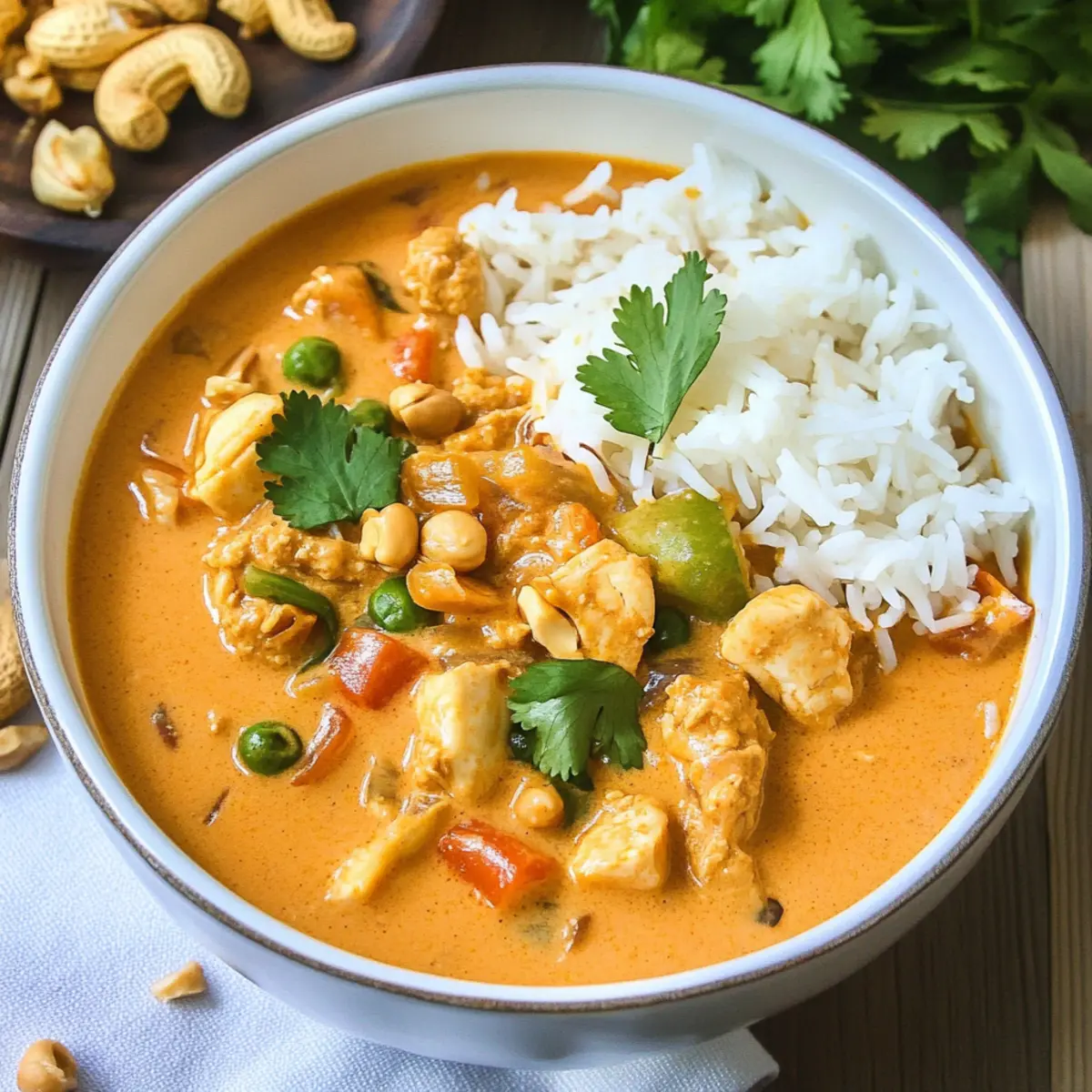
Why Choose This Thai Peanut Curry Recipe?
Simplicity, this dish comes together in just 30 minutes, making it perfect for busy weeknights. Creamy, rich flavor shines through the delightful combination of coconut milk and peanut butter, creating a decadent sauce. Versatile enough to adapt for vegetarians, simply swap chicken for tofu, ensuring everyone can enjoy it. Hearty ingredients like potatoes and carrots add nutrition and texture, while the optional garnishes elevate your presentation. Crowd-pleaser, it’s a family-friendly meal that proves homemade food can be just as comforting as your favorite takeout!
Thai Peanut Curry Recipe Ingredients
For the Curry
- Carrots - Adds sweetness and crunch; you can substitute with bell peppers for a different flavor.
- Potatoes - Provides heartiness and texture; russet or red potatoes work well, but sweet potatoes can add a delightful sweetness.
- Yellow Onion - Enhances depth and flavor; if unavailable, white onion is a suitable substitute.
- Chicken Breasts - The main protein source, cubed for even cooking; replace with tofu for a vegetarian option if desired.
- Olive Oil - Used for sautéing the vegetables; can be substituted with coconut or vegetable oil for a different flavor.
- Ground Ginger - Imparts warmth and spice; feel free to use fresh ginger for a more robust flavor.
- Minced Garlic - Boosts overall flavor; garlic powder can be a quick substitute if fresh garlic isn't on hand.
- Red Curry Paste - Essential for authenticity; adjust the amount to reach your preferred spice level and consider green curry paste as an alternative.
- Coconut Milk - Adds creaminess and richness to the sauce; opt for unsweetened for less sweetness, or use coconut cream for a thicker consistency.
- Peanut Butter - Provides the signature nutty flavor; creamy peanut butter is best, but almond or cashew butter can be used as well.
- Brown Sugar - Balances the dish with sweetness; honey or maple syrup can be substitutes if you want a different flavor profile.
- Soy Sauce - Contributes umami depth to the dish; use tamari for a gluten-free option.
- Lime Juice - Adds acidity and brightness; fresh lime juice is recommended, though bottled can be used in a pinch.
This Thai Peanut Curry Recipe is not only packed with delightful ingredients but also showcases the beauty of simplicity. Whether you're making it on a busy weeknight or treating the family to something special, you'll love how accessible and fulfilling this dish is!
How to Make Thai Peanut Curry Recipe
Heat the Oil: In a large skillet over medium-high heat, add olive oil. Allow the oil to warm up, then sauté the diced onions, carrots, and potatoes for about 4-5 minutes, until they begin to soften.
Add Chicken and Spice: Incorporate the cubed chicken, ground ginger, minced garlic, and red curry paste into the skillet. Mix everything well and sauté for an additional 2 minutes, allowing the spices to infuse into the chicken.
Stir in Coconut Milk: Pour in the coconut milk and bring the mixture to a gentle simmer over medium-low heat. Let it cook for about 10 minutes or until the vegetables are tender and the chicken is cooked through.
Combine Flavors: Add peanut butter, brown sugar, soy sauce, and lime juice to the skillet. Cook for another 4-5 minutes, stirring until everything is well combined and the sauce is creamy.
Serve and Garnish: Ladle the hot curry over steamed rice or noodles. Optional: Top with chopped peanuts for added crunch and flavor.
Exact quantities are listed in the recipe card below.
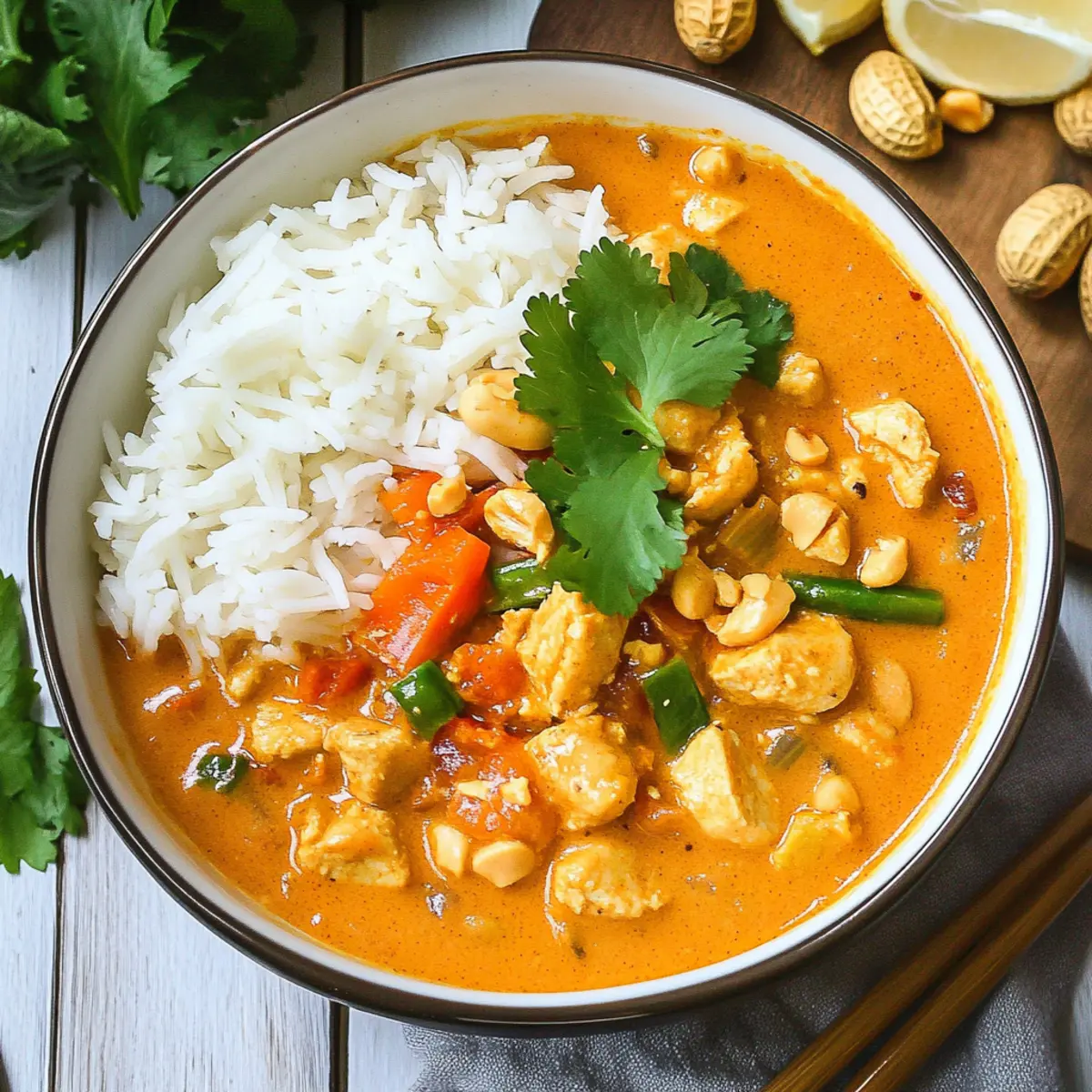
How to Store and Freeze Thai Peanut Curry Recipe
Fridge: Store leftovers in an airtight container for up to 3 days. Reheat gently on the stove over low heat until warmed through.
Freezer: Freeze in individual portions in airtight containers for up to 2 months. Thaw in the refrigerator overnight before reheating on the stove.
Reheating: For the best texture, reheat over medium-low heat, adding a splash of coconut milk or water to loosen the sauce if it's too thick.
Serving Suggestions: Serve warm over rice or noodles after reheating for a delicious and comforting meal, just like when it was first made!
Thai Peanut Curry Recipe Variations
Unlock the true potential of this comforting dish by adding your personal touch-let your creativity shine in the kitchen!
Vegetarian Option: Substitute chicken with crispy fried tofu to create a satisfying vegetarian version of this curry. The tofu absorbs the sauce beautifully, offering a delightful texture.
Extra Veggies: Enhance nutrition and color by adding vegetables like broccoli, snap peas, or bell peppers. They'll bring crunch and freshness to the dish, making it even more delightful.
Heat Level Up: Spice it up with a dash of red pepper flakes or a swirl of sriracha for an extra kick. Adjust to your personal preference to cater to the spice lovers in your home.
Alternative Grains: Serve it over jasmine or brown rice for a different starch option, or try it with noodles for a fun twist. Both options will complement the creamy sauce perfectly.
Nutty Fusion: For a unique flavor, mix in crushed cashews or peanuts as a topping. The added crunch will enhance the dish and offer a pleasant texture contrast.
Coconut Creamier: To elevate the creaminess, replace regular coconut milk with coconut cream. This will give the curry a richer texture, perfect for those who love indulgence in every bite.
Sweet Twist: Swap brown sugar with honey or maple syrup for a different sweetness profile. This will provide a delightful, unique twist on the traditional flavor.
Umami Boost: Add a splash of fish sauce or oyster sauce if you're not keeping it vegetarian. This will deepen the umami flavors, rounding out the dish beautifully.
Make Ahead Options
These Thai Peanut Curry Recipe components are perfect for busy meal prep enthusiasts! You can chop all the vegetables and cube the chicken up to 24 hours in advance, storing them separately in airtight containers in the refrigerator to maintain freshness. Additionally, you can mix the peanut butter, coconut milk, and spices together ahead of time, placing them in another container so the flavors meld. When you're ready to cook, just sauté the prepped veggies and chicken, combine everything with the sauce mixture, and simmer as usual. This way, you'll have a delicious homemade curry on the table with minimal effort, allowing you to savor those precious moments with your family!
What to Serve with Thai Peanut Curry Recipe?
Cozy up your dining experience with these delicious accompaniments that perfectly complement the flavors of your Thai Peanut Curry.
Fluffy Jasmine Rice: The classic pairing for Thai curries, this fragrant rice soaks up the rich sauce and adds a comforting touch.
Crispy Spring Rolls: A delightful crunch before your main dish, these light rolls filled with veggies are perfect for scooping up the creamy curry.
Garlic Naan: Soft, warm naan is ideal for mopping up every last drop of the savory curry, offering a delightful textural contrast.
Cucumber Salad: A refreshing side with a tangy dressing that cuts through the richness of the curry-it’s a bright, palate-cleansing addition.
Mango Sticky Rice: This dessert adds a sweet finish to your meal; the combination of creamy coconut milk with warm sticky rice is simply irresistible.
Chilled Coconut Water: A light, hydrating drink that complements the flavors without overpowering, making it a perfect thirst-quencher alongside the spicy curry.
Each of these accompaniments adds a unique twist to your meal, encouraging vibrant flavors and textures that dance on your palate!
Expert Tips for Thai Peanut Curry Recipe
Uniform Chicken Pieces: Ensure chicken is cubed evenly for consistent cooking; this helps avoid any undercooked or overcooked bites.
Spice Adjustment: Start with a small amount of red curry paste for the Thai Peanut Curry Recipe. You can always add more for extra heat as you taste it.
Adjust Consistency: If your curry turns out too thick, add a splash of water or extra coconut milk to achieve a smoother sauce.
Choose the Right Peanut Butter: Opt for creamy peanut butter to maintain a smooth texture. Avoid crunchy varieties to ensure the sauce blends well.
Mix in Extra Veggies: Feel free to add extra vegetables like broccoli or snap peas for added nutrition and a splash of color-make your Thai Peanut Curry personal!
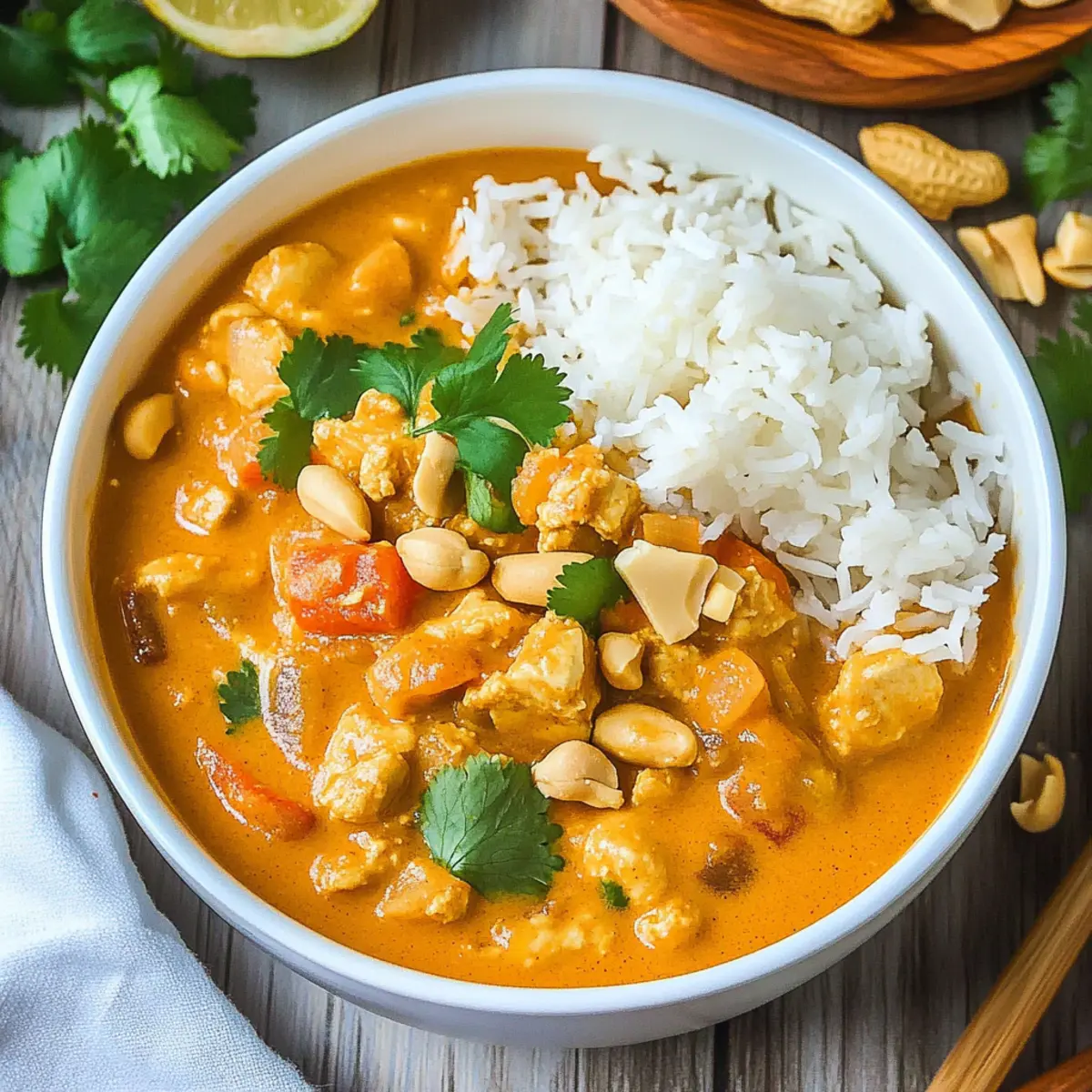
Thai Peanut Curry Recipe FAQs
What should I look for when selecting vegetables?
Choosing the freshest vegetables is key! Look for carrots that are bright orange and firm, while potatoes should be smooth with no dark spots. For onions, a firm feel and dry outer layers are ideal. If you see any soft spots or sprouting, it's best to avoid those.
How do I store leftovers of this Thai Peanut Curry?
Absolutely! Store your Thai Peanut Curry in an airtight container in the fridge for up to 3 days. When you’re ready to enjoy it again, simply reheat it gently on the stove over low heat until it’s warmed through, making sure not to bring it to a boil too quickly.
Can I freeze this curry for later?
Yes, you can! To freeze, pour the cooled curry into airtight containers, ensuring you leave a bit of space at the top for expansion. It can last in the freezer for up to 2 months. Simply thaw in the refrigerator overnight before you're ready to reheat it on the stove.
What should I do if my curry turns out too thick?
If your curry is thicker than you'd like, don't worry! You can simply add a splash of water or an extra bit of coconut milk while gently stirring over medium-low heat. This will help reach that creamy, smooth consistency while the flavors remain intact.
Are there any dietary considerations I should be aware of?
Very! If you have allergies, be cautious with the peanut butter and soy sauce as they can contain allergens. For a gluten-free option, use tamari instead of soy sauce. Also, if you're accommodating vegetarians, replacing chicken with crispy tofu is a delightful twist and allows everyone to enjoy!
How can I add more spice to my Thai Peanut Curry?
If you’re craving some heat, I recommend starting with a small dash of red pepper flakes or stirring in some sriracha at the end of cooking. Taste as you go, and remember, you can always add more, but it's hard to take spice away!
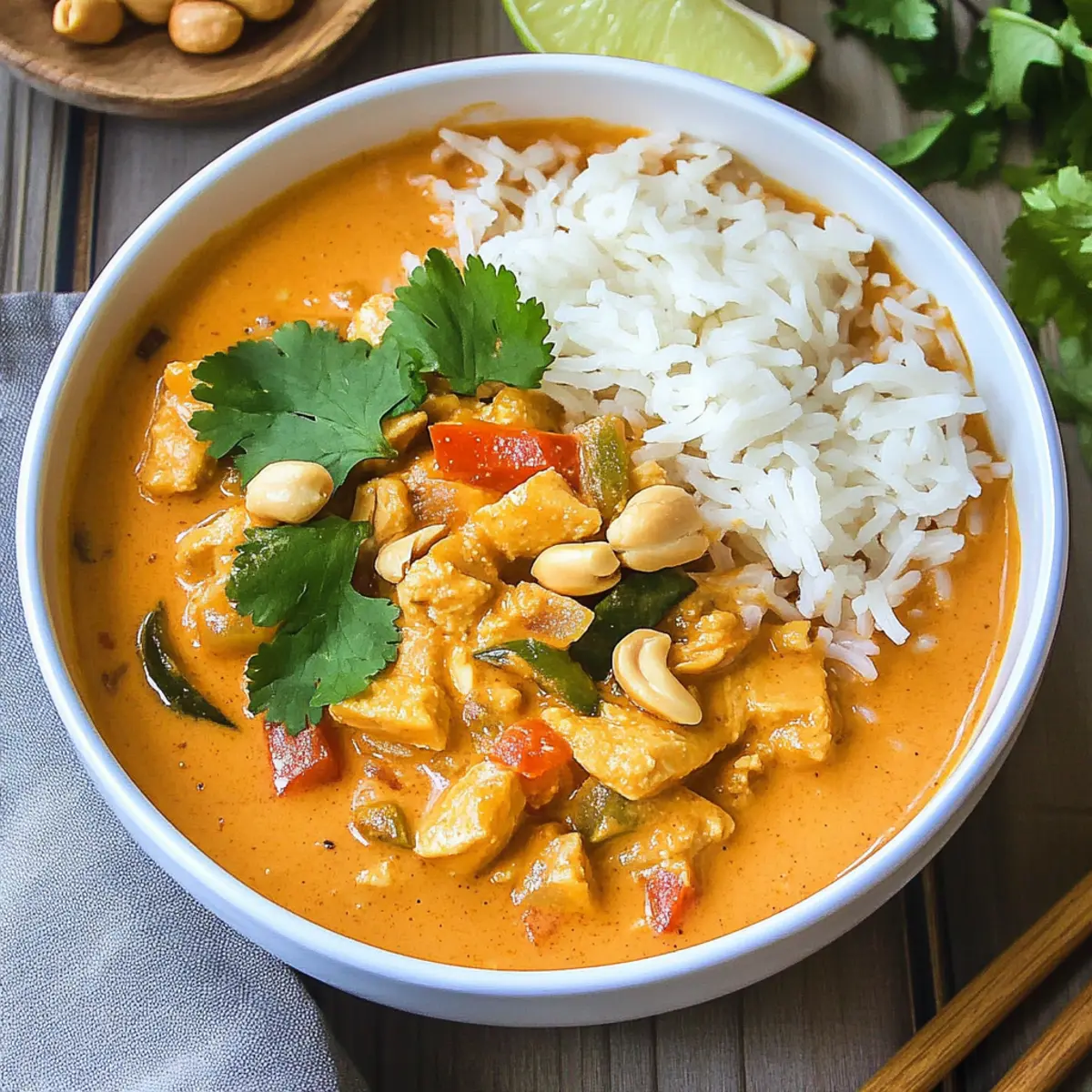
Quick and Creamy Thai Peanut Curry Recipe You'll Love!
Ingredients
Equipment
Method
- In a large skillet over medium-high heat, add olive oil. Allow the oil to warm up, then sauté the diced onions, carrots, and potatoes for about 4-5 minutes, until they begin to soften.
- Incorporate the cubed chicken, ground ginger, minced garlic, and red curry paste into the skillet. Mix well and sauté for an additional 2 minutes.
- Pour in the coconut milk and bring to a gentle simmer over medium-low heat. Cook for about 10 minutes or until vegetables are tender and chicken is cooked through.
- Add peanut butter, brown sugar, soy sauce, and lime juice to the skillet. Cook for another 4-5 minutes, stirring until the sauce is creamy.
- Ladle the hot curry over steamed rice or noodles. Optional: Top with chopped peanuts for added crunch.
Leave a Reply